
Is Cancun Safe for Spring Break? 2027 Travel Advisory Guide
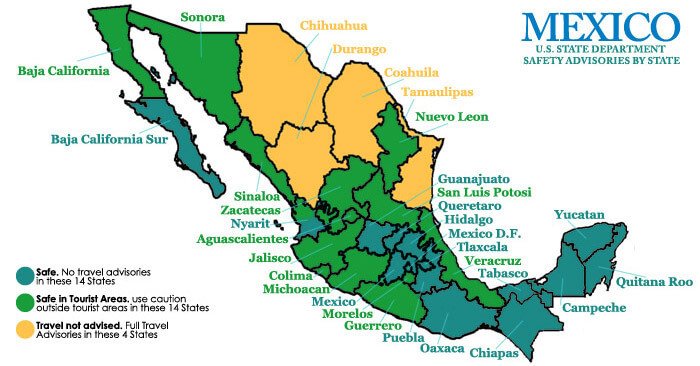
Substantially updated for 2027 with the current U.S. State Department advisory level (Level 2, in effect since August 2025), Mexico’s vape and counterfeit drug laws, and on-the-ground safety guidance from Go Blue Tours’ Cancun-based staff.
Key takeaways
- Yes, Cancun is safe for spring break 2027 when you stay in the Hotel Zone and follow basic precautions
- The U.S. State Department lists Cancun at Level 2: Exercise Increased Caution — the same advisory as France, Italy, and the UK
- The Cancun Hotel Zone has dedicated tourist police, 24/7 resort security, and is one of the most monitored tourist districts in Latin America
- Cartel violence in Mexico is concentrated in northern border states — not Cancun’s tourist zones
- The single biggest safety upgrade for student travel: booking through an operator with on-site staff in Cancun, not a discount aggregator
Yes — Cancun is safe for spring break 2027 when you stay in the Hotel Zone and follow standard precautions. The U.S. State Department currently lists Cancun and the state of Quintana Roo at Level 2: Exercise Increased Caution (in effect since August 2025) — the same advisory level applied to France, Italy, and the United Kingdom. Level 2 means “use standard travel awareness,” not “avoid travel.”
This guide explains exactly what the current advisory says, which areas are safe vs. which to avoid, and the 7 specific rules that have kept 100,000+ Go Blue Tours student travelers safe across 15+ years of Cancun spring break trips.
Planning a Cancun spring break 2027 trip?
Go Blue Tours has organized 100,000+ student spring break trips with on-site staff in Cancun every week of the season — since 2014.
The current U.S. State Department advisory for Cancun
The U.S. Department of State updates travel advisories on a rolling basis. For Cancun and the surrounding state of Quintana Roo (which includes Playa del Carmen, Tulum, and Cozumel), the current advisory level is Level 2: Exercise Increased Caution, in effect since August 2025.
The four-level State Department travel advisory system:
| Level | Meaning | Example destinations |
|---|---|---|
| Level 1 | Exercise Normal Precautions | Canada, Switzerland, Japan |
| Level 2 (Cancun’s current level) | Exercise Increased Caution | Cancun, France, Italy, UK, Germany, Spain |
| Level 3 | Reconsider Travel | Some Mexican border states, Honduras |
| Level 4 | Do Not Travel | North Korea, Syria, Afghanistan |
What Level 2 actually means for spring breakers: use standard travel awareness, stay in tourist zones, travel in groups, and follow common-sense precautions. It is not a recommendation to avoid Cancun. The same advisory level applies to most of Western Europe.
The current advisory specifically calls out:
- Staying within tourist zones (the Hotel Zone qualifies)
- Traveling in groups rather than alone
- Maintaining a low profile (no flashy jewelry, no large amounts of cash visible)
- Awareness of Mexico’s contraband laws (vapes, certain medications)
- Avoiding remote areas outside designated tourist corridors
Read the current advisory directly: U.S. State Department — Mexico Travel Advisory.
Why the Cancun Hotel Zone is safe
The Cancun Hotel Zone (Zona Hotelera) is not “Cancun the city” — it’s a 14-mile barrier island connected to mainland Cancun by two bridges. It’s where every major all-inclusive resort, restaurant, beach club, and spring break venue is located. It’s also where the safety infrastructure is concentrated.
What the Hotel Zone has:
- Dedicated tourist police (Policía Turística) — Spanish/English bilingual officers stationed throughout the Hotel Zone, in marked vehicles and on foot, specifically focused on tourist safety
- 24/7 resort security at every major property (Grand Oasis, RIU, Krystal, Hard Rock, Hyatt Ziva, etc.) — including controlled-access pool decks and beach areas
- One main road (Boulevard Kukulcan) running the entire 14-mile zone — easy to navigate, easy to stay on, easy to find help
- High-visibility patrols during spring break weeks — Quintana Roo state police significantly increase tourist-area patrols from late February through April
- Surveillance cameras throughout the Hotel Zone’s commercial corridors
- Active U.S. consular presence — the U.S. Consular Agency in Cancun is located in the Hotel Zone
Spring break crowds also work in students’ favor. The Hotel Zone during March is densely populated with college groups, families, and resort guests — anonymity favors safety, not the opposite.
Areas to avoid in and around Cancun
Not every part of greater Cancun is the Hotel Zone, and the State Department advisory is most relevant to areas outside the tourist corridor. Specifically avoid:
| Area | Why to avoid |
|---|---|
| Downtown Cancun (El Centro) at night | The actual city of Cancun (away from the Hotel Zone) has typical urban risks. Daytime visits to plazas like Mercado 28 are generally fine; nighttime visits without a trusted local are not recommended. |
| Unmarked taxis | Use only resort-arranged transfers, hotel taxi stands, or Uber (which operates legally in Cancun). Unmarked taxis have been linked to overcharging scams and a small number of robbery incidents. |
| Beach areas after dark away from resorts | The Hotel Zone beaches in front of major resorts are patrolled. Unlit beach stretches away from resort properties are not. |
| Street pharmacies and unlicensed clinics | Counterfeit prescription drugs (some laced with fentanyl) have been a documented issue. Only purchase medication from chain pharmacies like Farmacias Similares, Farmacias del Ahorro, or your resort’s medical desk. |
| South of Playa del Carmen toward Tulum at night | The road between Playa del Carmen and Tulum has seen sporadic incidents. Daytime travel for excursions is widely considered safe; late-night travel on this corridor is not advised. |
| Any “after-party” invite to a private home or unknown venue | The vast majority of spring break incidents involve students who left licensed venues for unfamiliar locations. Stay at licensed venues (your resort, official party packages, established clubs in the Hotel Zone). |
The cartel question — what’s real and what’s not
This is the single biggest concern parents and students raise, and the news coverage doesn’t always distinguish between regions. Here’s the honest picture:
Cartel-related violence in Mexico is real. It is also geographically concentrated in specific states — primarily Sinaloa, Tamaulipas, Michoacán, Guerrero, and parts of Zacatecas — all of which carry Level 3 or Level 4 advisories and are 2,000+ miles from Cancun.
Cancun and Quintana Roo are different. The state has localized criminal activity (like any tourism economy), but the Hotel Zone has not been the site of cartel-targeted violence against tourists. The State Department’s Level 2 advisory reflects general Mexico-wide caution about awareness — not a specific cartel threat to Cancun’s tourist areas.
If a news article says “Mexico travel advisory” without specifying the state, check which state is actually being discussed. The State Department’s advisory is state-by-state for a reason: a Level 4 in Tamaulipas (northern border) is unrelated to a Level 2 in Quintana Roo (Caribbean coast).
7 rules that keep students safe in Cancun
These are the rules Go Blue Tours staff communicate to every group before they arrive — refined across 15+ years and 100,000+ student travelers.
1. Stay in the Hotel Zone
Almost every documented incident involving a student traveler in Cancun has occurred outside the Hotel Zone. Stay on Boulevard Kukulcan or at your resort. Day excursions to Isla Mujeres, Tulum ruins, or the cenotes are fine when arranged through a licensed operator and timed to return before dark.
2. Travel in groups of 3 or more
The State Department recommends groups. So do we. Never leave a venue alone or with someone you just met. Designate a sober buddy system within your group for every night out.
3. Only use vetted transportation
Resort-arranged transfers, hotel taxi stands, and Uber are all safe. Unmarked taxis, “amigos” offering rides, and any vehicle not clearly marked are not. Save your resort’s WhatsApp number and your in-destination tour operator’s emergency line.
4. Only consume sealed or bartender-poured drinks
Never accept an open drink from a stranger. Never leave your drink unattended. At resorts, drinks come from controlled bars. At licensed party venues (Mandala Beach, The City, Coco Bongo), bartenders pour in front of you. This single rule prevents the majority of preventable incidents.
5. Lock your passport in the room safe; carry a photocopy
Your passport is the single most expensive thing to lose abroad. Keep it in the in-room safe. Carry a photocopy plus a photo on your phone. If your passport is lost or stolen, the U.S. Consular Agency in Cancun can issue emergency replacements.
6. Don’t bring vapes, e-cigarettes, or any prescription drugs without original packaging
Mexico bans e-cigarettes and vaping devices — possession at customs or in public can result in fines, confiscation, or detention. If you need prescription medication, bring it in the original labeled bottle plus a copy of your prescription. Do not buy any medication from a street pharmacy or unlicensed clinic in Mexico.
7. Book through an operator with on-site staff
This is the rule most students don’t think about until something goes wrong. If you book your trip through a discount website or aggregator, no one is on the ground in Cancun checking on you. If you book through an established student travel operator with on-site staff (like Go Blue Tours), there is a real person physically present in Cancun, 24/7, who can intervene, translate, advocate at the resort, get a doctor, or help with a passport issue.
Why your tour operator choice matters more than people think
This deserves its own section because it’s the safety factor most students underestimate. Cancun spring break trips fall into two booking models:
| Booking model | Safety implications |
|---|---|
| Direct / aggregator (Expedia, Booking.com, Priceline) | You get a hotel reservation. You’re on your own once you land. If you have a problem, you call the hotel front desk or U.S. customer service from your home country. No one local is responsible for you. |
| Established student travel operator with on-site staff (like Go Blue Tours) | You get a hotel reservation plus a physically present in-destination staff team. Spring break weeks have Go Blue staff in Cancun 24/7. If something goes wrong — medical issue, lost passport, resort dispute, transportation problem — there is a real person to call who can be at your hotel within 30 minutes. |
Go Blue Tours has operated in Cancun since 2014, with on-site staff every spring break week of every season. We’ve handled lost passports, medical emergencies, group payment disputes, resort overbookings, and everything in between. The single most-mentioned theme in our customer reviews is “the staff was always there.”
“Go Blue was fantastic! They were with us from landing in Mexico until takeoff at the end. Anything we needed there was always a representative around to guide us and answer questions.”
— Abigail W., via Google Reviews
“Traveling with Go Blue tours was absolutely amazing for me and my girls! Without them, our trip wouldn’t have gone as smoothly and SAFELY as it did. ARIEL specifically was amazing.”
— Erin A., via Google Reviews
“Go Blue was so helpful and kind on our trip. They made me feel very welcomed and safe on our trip. Veronica was amazing and we had a great time.”
— Mallory K., via Google Reviews
Want on-the-ground support for your 2027 Cancun spring break trip?
Go Blue Tours places staff in Cancun every spring break week. 100,000+ students. 1,598 schools. 15+ years of safe trips.
New Mexico laws students need to know
The vape ban
Mexico has banned the sale, import, and public use of e-cigarettes and vaping devices. Bringing a vape into Mexico — even in your carry-on — can result in customs confiscation, fines up to several thousand dollars, or in rare cases, detention. Do not bring any vape, pod system, or e-cigarette to Mexico. Period.
Counterfeit prescription drugs
The U.S. Embassy and DEA have issued repeated warnings about counterfeit prescription medications sold at street pharmacies in Mexican tourist areas — including fake Xanax, fake oxycodone, and fake Adderall, many of which contain fentanyl. Never purchase any medication from a non-chain pharmacy or unlicensed clinic in Mexico. If you need a prescription refilled, use your resort’s medical desk or a verified pharmacy chain like Farmacias del Ahorro.
Drinking age and ID
Mexico’s legal drinking age is 18. Resorts and licensed clubs in the Hotel Zone check ID — bring your passport (or photocopy) and a backup ID. Some venues will only accept a passport.
Beach drug enforcement
Carrying recreational drugs (including marijuana, despite legalization in some Mexican states) on Hotel Zone beaches or in clubs can result in arrest. Mexican police have authority over the entire beach. Don’t bring it; don’t buy it; don’t use it.
Emergency contacts and what to do if something goes wrong
Save these to your phone before you fly:
| Contact | Number / how to reach |
|---|---|
| Emergency in Mexico (911) | 911 — works exactly like in the U.S. |
| U.S. Embassy Mexico City (24/7 American Citizen Services) | +52-55-8526-2561 |
| U.S. Consular Agency in Cancun | +52-998-883-0272 — located in the Hotel Zone, Plaza Caracol |
| Cancun Tourist Police | 078 |
| Your resort front desk | Save on arrival; usually a 4-digit room phone code |
| Go Blue Tours on-site staff (if you booked with us) | Your group leader will share local WhatsApp + cell numbers at orientation |
If something serious happens:
- Call 911 if there’s an immediate emergency
- Contact your resort front desk — they have direct relationships with police, hospitals, and consular services
- If you booked with an operator that has on-site staff, contact them immediately — they speak Spanish, know the local system, and can advocate on your behalf
- Notify the U.S. Consular Agency in Cancun for any incident involving a U.S. citizen
- Stay with your group; do not split up to “go look for help”
For parents: how to actually evaluate Cancun safety
If you’re a parent reading this because your college student wants to go to Cancun for spring break 2027, here are the four questions that actually matter — in order:
- What’s the current State Department advisory? Level 2 — same as France or Italy. Check it yourself at travel.state.gov.
- Where will they actually be staying? If it’s a resort in the Hotel Zone (Zona Hotelera) — the safe answer is yes. If it’s a private rental in downtown Cancun or somewhere south of Playa del Carmen, push back on the booking.
- Who’s responsible for them in destination? If they booked through Expedia or directly with the hotel, the answer is “no one.” If they booked with an established student travel operator with on-site staff (like Go Blue Tours), there are real adults in Cancun whose job is to handle problems.
- Are they going with at least 3 friends and not splitting up? Group travel is the single biggest safety factor for student-aged travelers. Solo trips or pair trips carry meaningfully higher risk.
If you answer Level 2 / Hotel Zone / on-site operator / group of 3+, the trip is approximately as safe as a college spring break trip to any major U.S. city — arguably safer, because resort security is more controlled than a free-roam vacation in, say, New Orleans or Miami.
Parents: Want to talk to a real human about how Go Blue Tours handles safety, supervision, and on-site support? We’ve been organizing student spring break trips since 2014 and our team takes parent calls every day.
Frequently asked questions
Is Cancun safe for spring break 2027?
Yes — Cancun is safe for spring break 2027 when you stay in the Hotel Zone and follow standard precautions. The U.S. State Department lists Cancun at Level 2 (Exercise Increased Caution), the same advisory level as France, Italy, and the UK.
What is the current Cancun travel advisory level?
Level 2: Exercise Increased Caution, in effect since August 2025. This is the standard advisory for most major Western European destinations and means “use normal travel awareness,” not “avoid travel.”
Is the Cancun Hotel Zone safe?
Yes. The Hotel Zone has dedicated tourist police, 24/7 resort security, surveillance cameras, and high-visibility patrols. It is one of the most heavily monitored tourist districts in Latin America.
Should I avoid Cancun because of cartel violence?
No. Cartel-related violence in Mexico is concentrated in northern border states and parts of Sinaloa, Michoacán, and Guerrero — none of which are near Cancun. The Hotel Zone has not been the site of cartel-targeted violence against tourists.
What areas should I avoid in Cancun?
Avoid downtown Cancun (El Centro) at night, unmarked taxis, unlit beach areas away from resorts, street pharmacies, and the road between Playa del Carmen and Tulum after dark.
Can I bring my vape to Cancun?
No. Mexico bans e-cigarettes and vaping devices. Possession at customs or in public can result in fines, confiscation, or detention. Leave your vape at home.
How do I find safe transportation in Cancun?
Use resort-arranged transfers, hotel taxi stands, or Uber. Uber operates legally in Cancun. Do not use unmarked taxis.
What’s the safest way to book a Cancun spring break trip?
Book through an established student travel operator with on-site staff in Cancun. Operators like Go Blue Tours have physically present staff in destination 24/7 during spring break weeks who can intervene if something goes wrong. Aggregators and direct hotel bookings leave you on your own once you land.
How do I get a quote for a safe Cancun spring break trip?
Request a free, no-obligation quote at gobluetours.com/contact. Quotes typically include all-inclusive resort accommodation, airport transfers, optional party packages, and 24/7 in-destination support.
Primary sources
- U.S. State Department — Mexico Travel Advisory (current)
- U.S. Embassy & Consulates in Mexico
- U.S. State Department — Students Abroad Resources
- CDC — Travelers’ Health: Mexico
- DEA — Warning on counterfeit prescription pills
About this guide
This guide was originally published in August 2016 and has been continuously updated as Mexico travel advisories evolve. The June 2026 update reflects the current U.S. State Department Level 2 advisory (in effect since August 2025), Mexico’s e-cigarette and counterfeit medication laws, and operational guidance from Go Blue Tours’ Cancun in-destination staff for the 2027 spring break season.
Go Blue Tours is a 2014-founded U.S. student travel company that has organized spring break trips for over 100,000 students from 1,598 colleges. We’ve had on-site staff present in Cancun every spring break week since 2014 — meaning the safety guidance in this guide is informed by 15+ years of direct, in-destination experience handling real student-traveler situations.
- Originally published: August 31, 2016
- Last reviewed: June 16, 2026
- Next scheduled review: July 16, 2026
- Current State Department advisory level for Quintana Roo: Level 2 (Exercise Increased Caution)
Related guides
Ready to Book Your Spring Break?
All-inclusive group packages — flights, hotel & transfers, handled by a real Account Executive. BBB A+ accredited since 2016.
Similar Posts
Spring Break 2025 | What to Know Before You Go
Spring break is just around the corner, and with 2025 promising exciting adventures, now is the time to start planning. Whether you’re dreaming of sun-soaked beaches or action-packed escapes, having all the essential information at your fingertips is key to making the most of your break. Here’s your ultimate guide to Spring Break 2025, with […]
Read More
Cancun vs. Punta Cana: Which Destination is Right for You?
Cancun vs. Punta Cana: Which Destination is Right for You? Cancun vs. Punta Cana: Which Destination is Right for You? Spring break is the perfect time to unwind, and Cancun and Punta Cana are two of the top destinations for students and travelers looking to combine fun, sun, and adventure. But which one should you […]
Read More
Riu Santa Fe Cabo Spring Break 2023
The Riu Santa Fe 2023 Now the whole strip is so popular that it is the best college spring break destination for 2023. If you want unbelievable views, non-stop parties, stocked mini-bars, and hot college guys and girls going absolutely wild – the Santa Fe Spring Break is your place to be. The drinking age […]
Read More